
 English
 العربية
 Français
 Deutsch
 Español
 Login
LoginQNB: Germany’s Fiscal Expansion Marks a Turning Point for Economic Growth
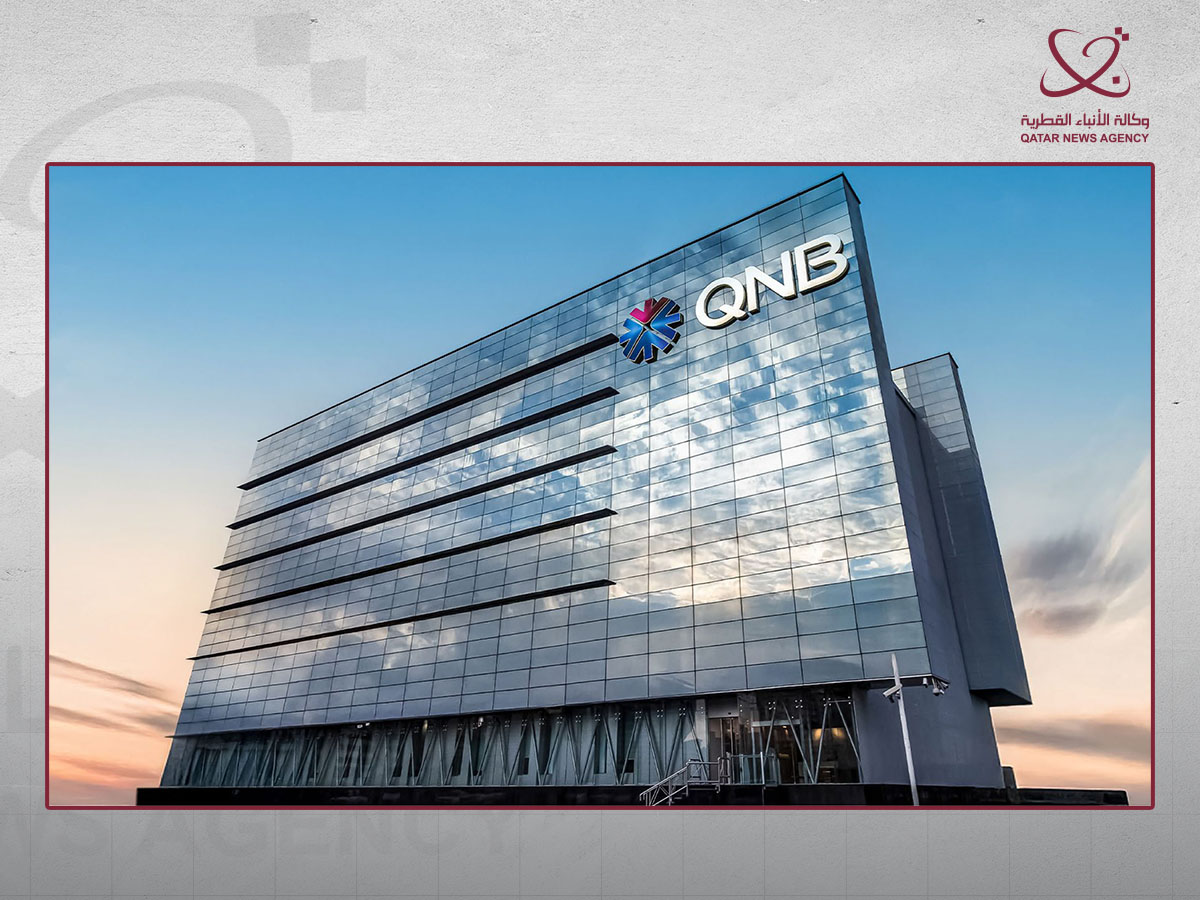
Doha, March 14 (QNA) - Qatar National Bank (QNB) said that Germany's macroeconomic outlook is improving, supported by fiscal expansion, an emerging recovery in manufacturing and more accommodative monetary conditions. While structural obstacles remain, the policy shift should mark the beginning of a better growth trajectory.
In its weekly economic commentary, QNB added that the policy shift could mark a turning point for the German economy and has already led to an improvement in growth expectations and investor sentiment. For decades, Germany stood as Europe's economic growth engine, as well as a pillar of financial stability. However, over the last decade, structural headwinds began to materialise that found its origin two decades ago through strategic decisions by the government. The impact and challenges today include negative demographic trends, excessive regulatory and tax burdens, energy supply bottlenecks, and the insufficient adaptation of leading sectors to a rapidly changing global landscape. As a result, Germany's economy has underperformed, with real GDP remaining almost unchanged in the last 6 years. This compares poorly with the 14.9% expansion for the US, or even the 6.8% growth for the rest of the Euro area during the same six-year period.
The administration led by Chancellor Friedrich Merz could mark a turning point in economic policy and performance. For decades, Germany had prioritized fiscal discipline and debt sustainability. In contrast, the new government has advanced a massive multi-year fiscal expansion programme that could reach EUR 1 trillion, including infrastructure and defence.
After a contraction of the German economy by 0.5% in 2024, and a marginal growth of 0.2% in 2025, the survey points to improving trends, with growth rates of 1% and 1.5%, respectively, for 2026 and 2027.
Germany is entering a new expansion phase supported by cyclical tailwinds and a pivot in fiscal and monetary policy. In this article, the QNB discusses the main factors behind the improvement of Germany's macroeconomic outlook.
First, fiscal policy, with a focus on public investment and defence spending, will provide a significant boost to economic growth. Federal expenditures rose by 6% in 2025, a sizable expansion in historical terms that is expected to accelerate. This year, Investment Expenditures and Defence Spending are planned to rise to EUR 232 Bn, implying an increase of 40%.
Second, manufacturing is gradually stabilizing, pointing to the early stages of a cyclical recovery. After reaching its peak in 2017, the sector faced a successive series of negative shocks, including global trade tensions, the Covid-pandemic, the energy crisis due to the Russian-Ukrainian war, and the decline of the conventional automotive industry.
Third, monetary policy and credit conditions are becoming increasingly supportive. After bringing inflation under control, the European Central Bank (ECB) began a policy rate cutting cycle that reduced its benchmark deposit rate from a restrictive 4% in mid-2024 to around 2%, a level broadly consistent with estimates of neutrality. The 200-basis point (b.p.) easing is gradually translating into lower borrowing costs, providing support to investment and consumption. As financial conditions improve, total credit to households and firms is growing in real terms, after several years of contraction. Thus, lower borrowing costs and growing credit volumes are expected to reinforce the broader growth recovery in the medium term. (QNA)


Hello! How can we help?


