
 English
 العربية
 Français
 Deutsch
 Español
 русский
 हिंदी
हिंदी اردو
اردو
 Login
LoginKatara Tech Forum Highlights AI's Role in Islamic Sharia Applications
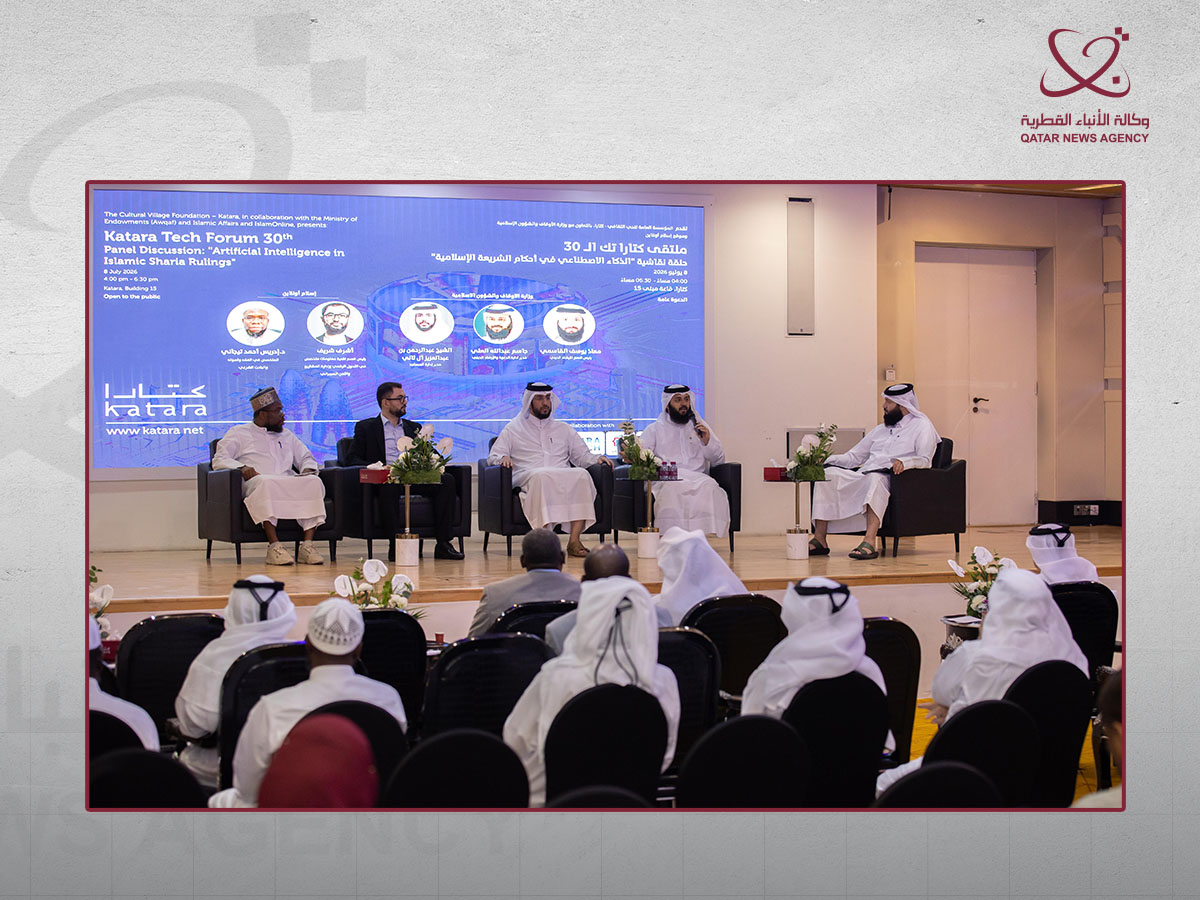
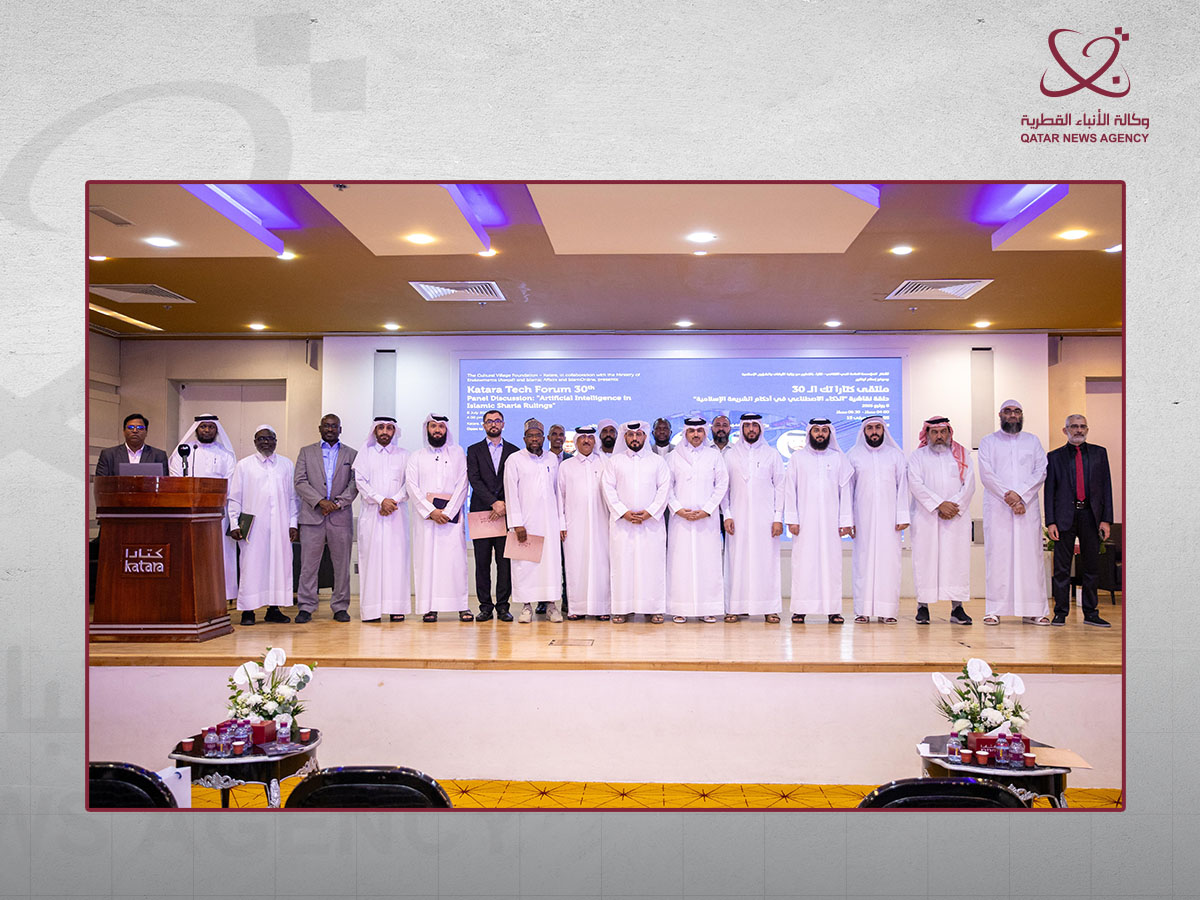
Doha, July 08 (QNA) - The Katara Cultural Village collaborated with the Ministry of Endowments (Awqaf) and Islamic Affairs, alongside IslamOnline, in convening the 30th Katara Tech Forum in Doha.
The panel discussion was dedicated to discussing the subject of artificial intelligence in Islamic Sharia provisions. It brought together a group of specialists in Sharia sciences, technology, and media.
The panel was moderated by the Head of the Religious Guidance Section at Awqaf, Mu'adh Yusuf Al Qasimi, with the participation of a variety of officials and in-the-know experts in information technology and religious guidance.
Dr. Idris Ahmed Tijani, a specialist in jurisprudence and its principles and a legal researcher, weighed in on this matter and presented a streamlined image of the salient practical applications of AI in the Sharia domain.
He outlined realistic models for leveraging cutting-edge technologies for Fatwa, accessing Sharia sources, and supporting scientific research, emphasizing the operation of these tools into line with scientific and Sharia regulations that ensure content reliability and never override the specialists' role.
Dr. Tijani highlighted AI experience in analyzing and evaluating Friday sermons through converting these sermons into digital texts and unpacking their contents, in addition to extracting their themes, verses, and hadiths, as well as preparing evaluative reports according to rigorous scientific standards, while maintaining human review as the fundamental pillar for validating the results.
His primer further focused on IslamOnline's experience in digital transformation and investing in AI-powered technologies aimed at upgrading semantic search engines and facilitating access to reliable religious content.
The primer reviewed the performance indicators and growth metrics achieved by the website’s digital platforms during the first half of 2026, reflecting the expanding reach of digital Islamic content and the growing reliance on smart solutions in disseminating knowledge.
The panel discussion that followed this primer showcased rich conversation among the panelists, who drilled down on a raft of themes, foremost of which was utilizing AI in Sharia Fatwas, unpacking Friday sermons, alongside its role in developing Islamic content.
The panelists further delved into the impact of AI on visual media and debated the opportunities offered by these modern technologies for Sharia sciences, as well as the challenges relevant to precision and reliability and the significance of laying out Sharia and regulatory frameworks that ensure responsible utilization of these technologies.
The panelists emphasized that AI is a supportive tool that helps accelerate browsing and knowledge control, affirming that it improves access to information.
However, they noted that it cannot supersede either scholars or juristic reasoning in Islamic law, stressing that human oversight remains the kernel source in rendering Fatwas and creating religious content. (QNA)


Hello! How can we help?


