
 English
 العربية
 Français
 Deutsch
 Español
 русский
 हिंदी
 اردو

 Login
Lesotho Prime Minister: Strengthening Partnerships between Privat Sectors in Developed, Developing Countries Supports Balanced Global Economy
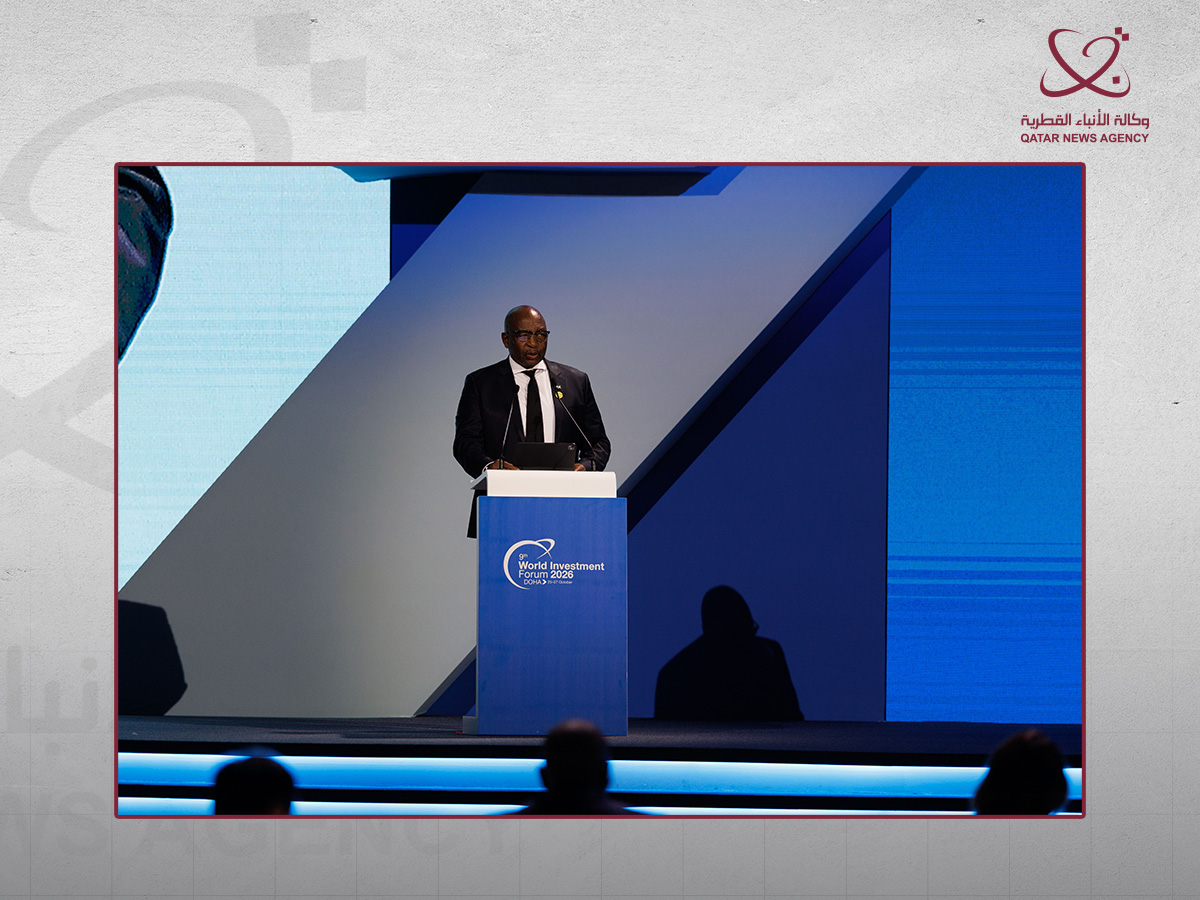
Doha, October 26 (QNA) - HE Prime Minister of the Kingdom of Lesotho, Samuel Matekane affirmed that strengthening partnerships between the private sectors in developed countries and their counterparts in developing nations contributes to supporting a balanced global economy.
In a special address delivered during the 9th World Investment Forum 2026, His Excellency indicated that the global investment landscape is at a critical juncture, undergoing radical transformations driven by rapid technological advancement, shifts in international trade flows, climate-related challenges, geopolitical uncertainty, and mounting pressure on the sources of funding for development projects.
His Excellency said that while these developments reveal the vulnerabilities of developing nations, particularly the least developed countries, they simultaneously present new opportunities for investment geared toward trade and business, rather than reliance on aid.
His Excellency emphasized the importance of joint ventures and close business partnerships in providing appropriate funding sources for small, medium, and micro-enterprises, which he identified as a fundamental pillar of economic development.
On the other hand, HE the Prime Minister of the Kingdom of Lesotho urged for strengthening local and regional supply chains, and for building effective links between foreign investors and local exporters.
His Excellency said that investment should not operate in isolation from the local economy; rather, it must contribute to the transfer of knowledge, the development of local capabilities, the creation of job opportunities, and the empowerment of enterprises to participate more effectively in regional and global value chains.
His Excellency emphasized the importance of the relationship between investment and human capital development, given the growing digital transformation within economies and the evolution of production systems. He said that it has become essential for the youth to acquire technical, entrepreneurial, and digital skills that will enable them to take advantage of emerging economic opportunities. Consequently, investing in individuals is just as important as investing in physical infrastructure.
His Excellency added that by combining capital, knowledge, technology, and skills, countries can build productive and competitive economies. He emphasized that development aid should complement and stimulate productive private investment, especially in situations where funding gaps, a lack of infrastructure, and risk assessments constrain investment flows.
He pointed out that the forum's theme, "Investing in the Future," calls on the international community to look beyond immediate financial returns and consider building a better global economy for future generations.
His Excellency said that it is an investment in a future where landlocked developing countries are no longer permanently constrained by their geography; where least developed countries receive support to overcome the structural barriers hindering their participation in global trade; and where micro, small, and medium-sized enterprises gain access to global markets. He added that it is also a future in which regional cooperation transforms geographical limitations into opportunities for shared prosperity, a future where the international community recognizes that sustainable global growth depends on the active participation of all economies.
He urged for a commitment to mobilize investments that transform economies, strengthen partnerships, expand trade, and ensure that no country is left behind. (QNA)


Hello! How can we help?


