
 English
 العربية
 Français
 Deutsch
 Español
 русский
 हिंदी
हिंदी اردو
اردو
 Login
LoginHBKU President to QNA: We Aspire to Join World's Top 100 Universities
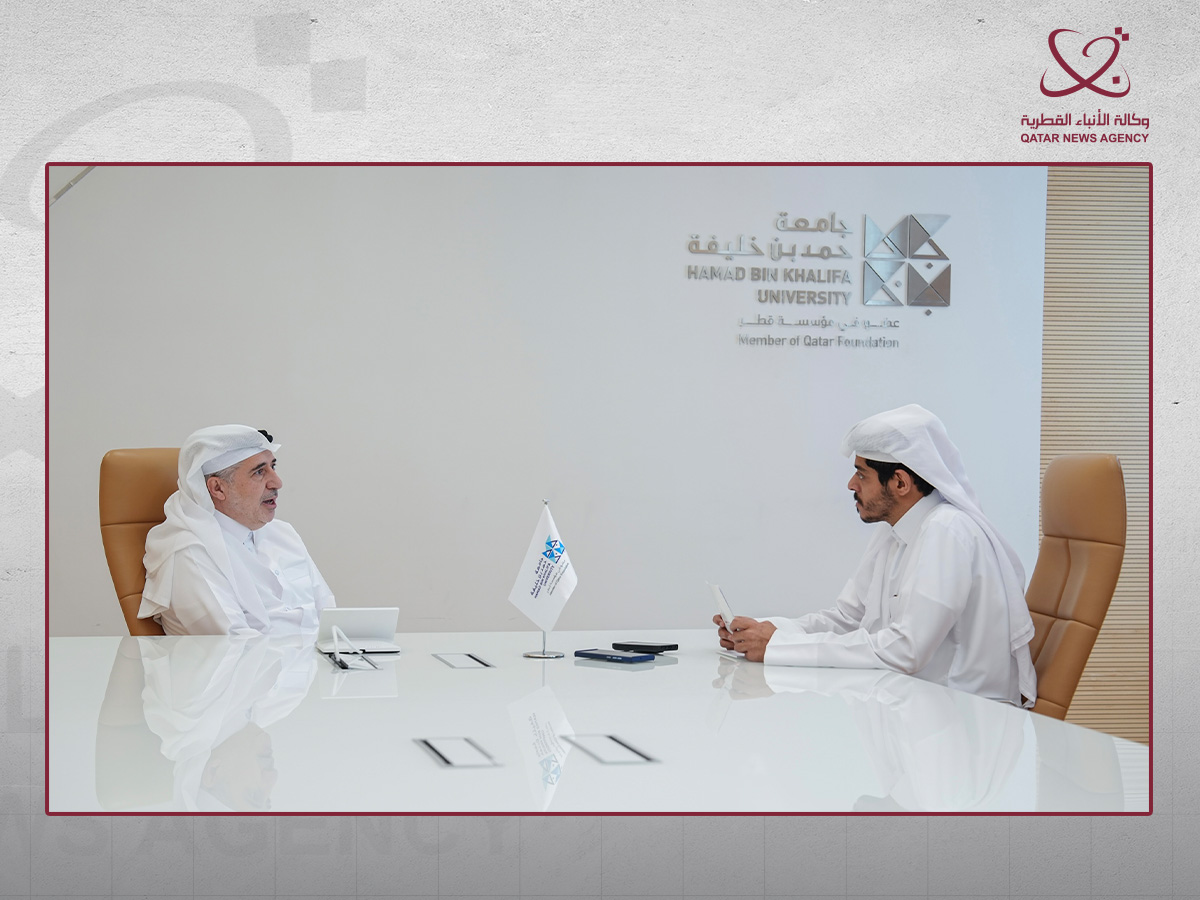
Doha, October 18 (QNA) - Hamad Bin Khalifa University (HBKU) looks forward to joining the world's top 100 universities after ranking 126th globally in the 2027 Times Higher Education rankings, according to its president, Dr. Ahmad Mujahid Omar Hasnah.
Speaking exclusively to Qatar News Agency (QNA), Dr. Hasnah said HBKU's entry into the world's top 150 was a remarkable achievement that had not come about by chance. Rather, it grew out of sustained efforts by the university's staff, Qatar Foundation (QF), and a variety of stakeholders nationwide since the university was established in 2010.
The milestone, Dr. Hasnah remarked, also underscores the progress HBKU has made in strengthening its academic and research standing.
The university would continue to attract scientific and research talent while developing forward-looking academic programs that respond to national priorities and growing societal needs, the president underlined.
On the significance of this feat for Qatar, he said HBKU's progress reflects the substantial advances made in higher education and scientific research across the country, as well as the human and material resources available to Qatari universities.
These strengths have reinforced Qatar's standing among nations supporting scientific research and innovation on both the regional and global stages, Dr. Hasnah continued. He recalled that HBKU was established as a research-driven university with a developmental mission and a pivotal role in preparing and equipping Qatari professionals with the knowledge they need to contribute to national development.
He stressed that developing national capabilities is a bedrock of the university's strategy, as reflected in the growing number of Qatari students and graduates who continue to contribute across national sectors, supporting Qatar's knowledge-based economy and advancing innovation.
Dr. Hasnah said the university has more than 1,800 students and has graduated over 2,450 students since its inception, including more than 700 Qataris. Its eight colleges are the College of Islamic Studies, College of Science and Engineering, College of Health and Life Sciences, College of Law, College of Public Policy, College of Humanities and Social Sciences, College of Economics and Management, and College of Education.
Named in honor of the late HH the Father Amir Sheikh Hamad bin Khalifa Al-Thani, HBKU regards the name as both an honor and a responsibility, Dr. Hasnah said. That responsibility, he added, requires the university to press ahead with its efforts to consolidate its standing among the world's leading universities.
He said HBKU's primary objective was to strengthen the connection between scientific research, the needs of Qatari society, Qatar's national priorities, and global challenges. To advance that objective, the official noted that the university had pursued successive strategic plans, the latest of which is a 10-year strategy extending through 2035.
These plans focus on developing integrated systems and innovative strategic solutions aligned with Qatar's aspirations, advancing technological progress while ensuring that innovation remains ethical and responsible, Dr. Hasnah pointed out.
Dr. Hasnah further indicated that human-capital development is also central to these plans. This involves preparing specialized national talent with the knowledge and skills required to lead in these fields; developing academic and training programs that connect scientific research with labor-market needs and the requirements of the public and private sectors; empowering young researchers and professionals to participate meaningfully in shaping policies and solutions; and creating opportunities to collaborate with international experts and institutions to transfer expertise and exchange knowledge. Together, these efforts are intended to strengthen Qatar's position as an international knowledge hub, Dr. Hasnah said.
Asked about the main factors behind the university's rise, Dr. Hasnah identified teaching quality, an advanced research environment, outstanding research outputs, and the global impact of its research as key contributors to the achievement.
He said HBKU had succeeded in translating knowledge into tangible practical value through projects and applications that serve society and provide practical solutions to contemporary challenges.
The role of a modern university extends beyond teaching and academic research to include technology transfer and the development of applied innovations that deliver economic and societal benefits, Dr. Hasnah continued.
Discussing HBKU's strongest performance indicators in the rankings, Dr. Hasnah said the university had recorded outstanding results across most of the assessment criteria. He noted that it scored 99.8 points in the industry category, which measures a university's ability to translate research into innovations and patents that benefit the private sector and the national economy.
The official went on to assert that HBKU also scored 92.1 points for research quality and 91.7 points for international outlook. The latter indicator measures the proportions of international students and faculty members, as well as the share of research published through co-authorship with researchers from other countries, reflecting the breadth of the university's international research partnerships.
In addition, Dr. Hasnah attributed the achievement to the broader QF and Education City ecosystem and to the inspiring vision of the late HH the Father Amir, Sheikh Hamad bin Khalifa Al-Thani, during whose reign QF was established.
He also highlighted the unwavering support of HH Sheikha Moza bint Nasser, Chairperson of QF, describing HBKU as one of the foundation's principal academic and research pillars.
The efforts of HE Sheikha Hind bint Hamad Al-Thani and the university's Board of Trustees have also helped create the conditions for HBKU to deliver outstanding education and conduct research that meets international standards, Dr. Hasnah said. He emphasized that their contributions have strengthened the university's ability to achieve such milestones within a relatively short period.
Asked how the ranking could affect HBKU's ability to attract students, researchers, and distinguished faculty members, Dr. Hasnah said the achievement would help draw ambitious and talented students from Qatar and abroad, while attracting leading academics and researchers seeking to turn their ideas into research projects with tangible impact.
The university's standing also enhances students' opportunities to advance their academic and professional careers and provides researchers with an environment conducive to turning ideas into applications that serve society, he said.
Dr. Hasnah identified artificial intelligence, programming, biomedical sciences, clean energy, and other emerging scientific fields as key drivers of HBKU's next phase of growth and expanding global presence. He noted that the university had already made incredible strides in these areas by attracting scientific talent and distinguished researchers from around the world, alongside students interested in these specializations.
The university is working to develop frameworks suited to Qatar's local culture and values, he added.
Concluding his remarks, Dr. Hasnah said HBKU would continue working toward its strategic objectives of supporting Qatar's national priorities and advancing solutions to environmental, industrial, and societal challenges. Academic and research excellence, he said, is the natural path toward higher positions in global rankings and a stronger standing among leading international academic institutions. (QNA)


Hello! How can we help?


