
 English
 العربية
 Français
 Deutsch
 Español
 русский
 हिंदी
हिंदी اردو
اردو
 Login
Login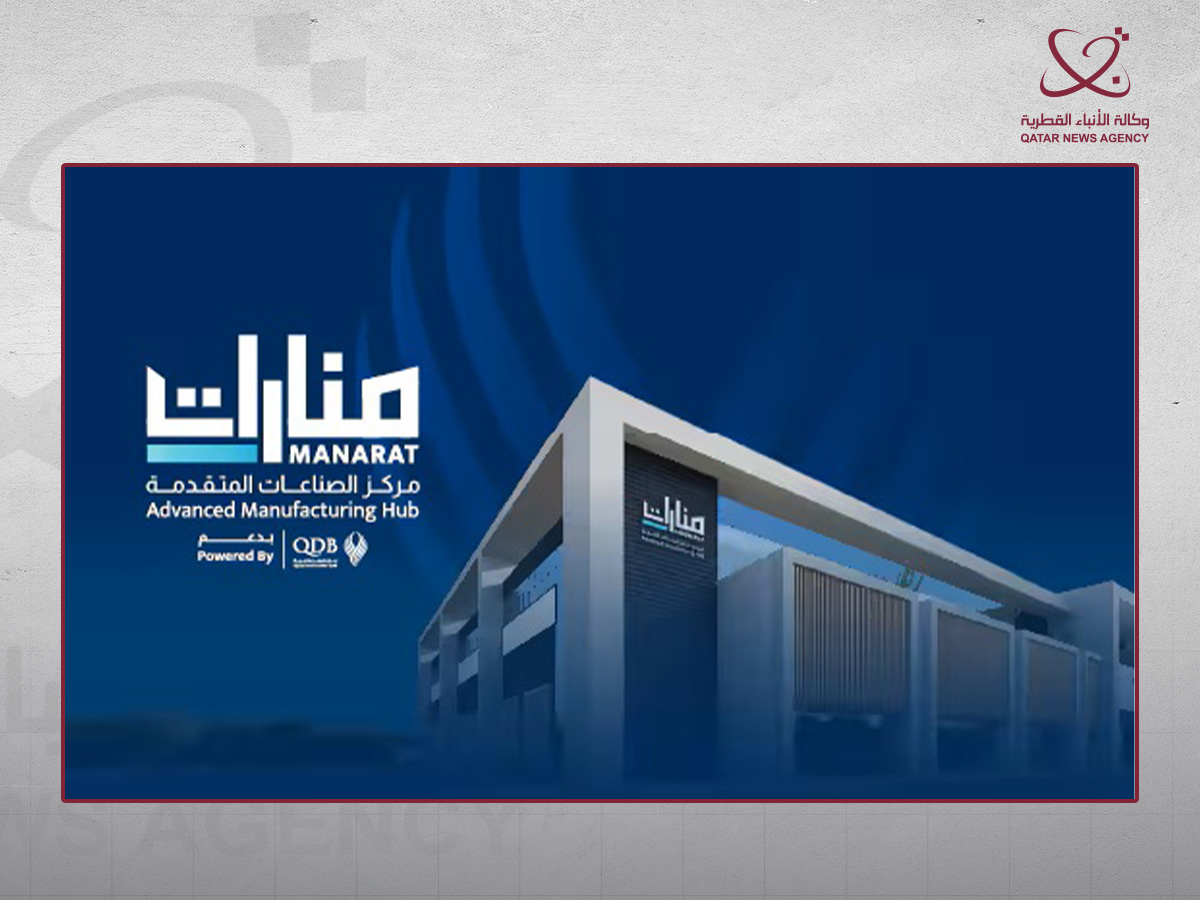
Qatar Development Bank's Executive Director of Advisory, Dr. Hamad Salem Mejegheer highlighted the available support mechanisms; including financing, through which applicants can apply for funding to cover capital and operating expenses via the National Funding Gate (Tamkeen), in addition to consultancy and training through specialized and shared services that support operational efficiency and the adoption of advanced manufacturing solutions, as well as export support, including export financing and insurance solutions, trade missions, and assistance with integration into regional and global supply chains.
He said that unit lease agreements extend for five years, renewable, with a one-time grace period of six months from the contract commencement date.
Dr. Mejegheer indicated that the requirements for launching projects at the center include demonstrating technical and economic feasibility, establishing market demand, and submitting a clear operational plan that demonstrates readiness to adopt Fourth Industrial Revolution technologies, in addition to obtaining the necessary industrial licenses.
Once a project is approved, the necessary procedures are completed, including document verification, preparation of the lease agreement, and review of the plans. The interior fit-out work is then carried out and approved by the bank and relevant authorities, including Civil Defence and KAHRAMAA, he continued, noting that production can then begin once the fit-out is complete, compliance approvals have been obtained, and utilities have been activated.
He concluded his remarks to QNA by explaining that this initiative supports industrial units in the New Industrial Area, comprising 12 units of 1,210 square meters each and four units of 695 square meters each, with a three-phase electricity supply of up to approximately 500 kW, adjustable according to demand, as well as air-conditioning, ventilation, fire protection, health, safety, and environmental systems.
For his part, Director of the Center for the Fourth Industrial Revolution at the Ministry of Finance, Dr. Abdulaziz Al Ali, said in exclusive statements to Qatar News Agency (QNA), that the Center plays a pivotal role in facilitating the exchange of knowledge and expertise among the local partners involved in the Manarat project, the World Economic Forum's network, and the global network of Fourth Industrial Revolution Centers.
He indicated that the Center conducts studies and holds discussion sessions with the international community to bring in global best practices for the responsible use of Fourth Industrial Revolution technologies in smart manufacturing, which helps ensure the development of integrated models for the project, while highlighting its key success stories and lessons learned on a global scale.
Dr. Al Ali noted that the Center is currently working with a team from the World Economic Forum's Advanced Manufacturing and Supply Chains Center to identify sub-projects that it will undertake in collaboration with Qatar Development Bank (QDB) and the Ministry of Commerce and Industry (MOCI).
Regarding the key technologies expected to shape the industrial sector in the coming years, Dr. Al Ali explained that several technologies will play a significant role in the future of manufacturing. These include the Industrial Internet of Things (IIoT), which provides the digital foundation for industrial transformation by connecting machines and equipment in real time, enabling the instant monitoring of performance, energy consumption, and production indicators.
Industrial artificial intelligence (Industrial AI) will also be a key driver of improvements in productivity and quality, while reducing equipment failures through predictive maintenance, while other important applications include automated inspection using computer vision, intelligent production planning and supply chain management, and digital twins, which enable production lines to be simulated before changes are implemented. This allows expansion scenarios to be tested without disrupting actual operations, while improving asset utilization and reducing operational risks. Smart automation and robotics will also help increase productivity and allow human talent to focus on higher-value tasks, he added.
In previous remarks to QNA, Director of the Industrial Development Department at MOCI, Abdulla Ghanim Al Maadeed said that, the Advanced Manufacturing Hub (Manarat) represents a significant step in supporting Qatar's efforts to develop a more advanced and competitive industrial sector by providing an enabling environment for the adoption of Fourth Industrial Revolution technologies and leveraging technology and innovation to enhance factories' production capabilities.
MOCI is working to advance digital transformation in the industrial sector, enhance factories' digital readiness, and encourage the adoption of automation, AI, and advanced digital solutions to improve the production efficiency and strengthen the competitiveness of national industries, he added.
He pointed out that Manarat supports these efforts by helping expand the use of advanced technologies and facilitate the exchange of knowledge and expertise, in line with the objectives of Qatar's National Manufacturing Strategy 2024-2030, adding that cumulative investment in the industrial sector reached QAR 248.44 billion in the second quarter of 2026.
These objectives are particularly important amid the rapid transformations taking place in the global economy, where the ability to adopt AI, automation, data, and digital technologies has become a key factor in determining the position of industries within global value chains.
From this perspective, Manarat can be seen as more than a project providing industrial units, as it represents a platform for developing a new model for Qatari factories, built on the integration of technology, skills, financing, value chains, and markets.
Manarat sets a dual objective for Qatar's industrial sector: improving the efficiency of existing factories while building a new generation of factories capable of competing globally. This ambition extends to having Qatari factories become part of the global network of Lighthouse Factories, reflecting the national industry's ability to move beyond technology adoption towards developing world-class models of smart manufacturing. (QNA)


