
 English
 العربية
 Français
 Deutsch
 Español
 русский
 हिंदी
 اردو

 Login
Qatar and Brunei Darussalam: Deep Rooted Relations and Promising Horizons for Partnership
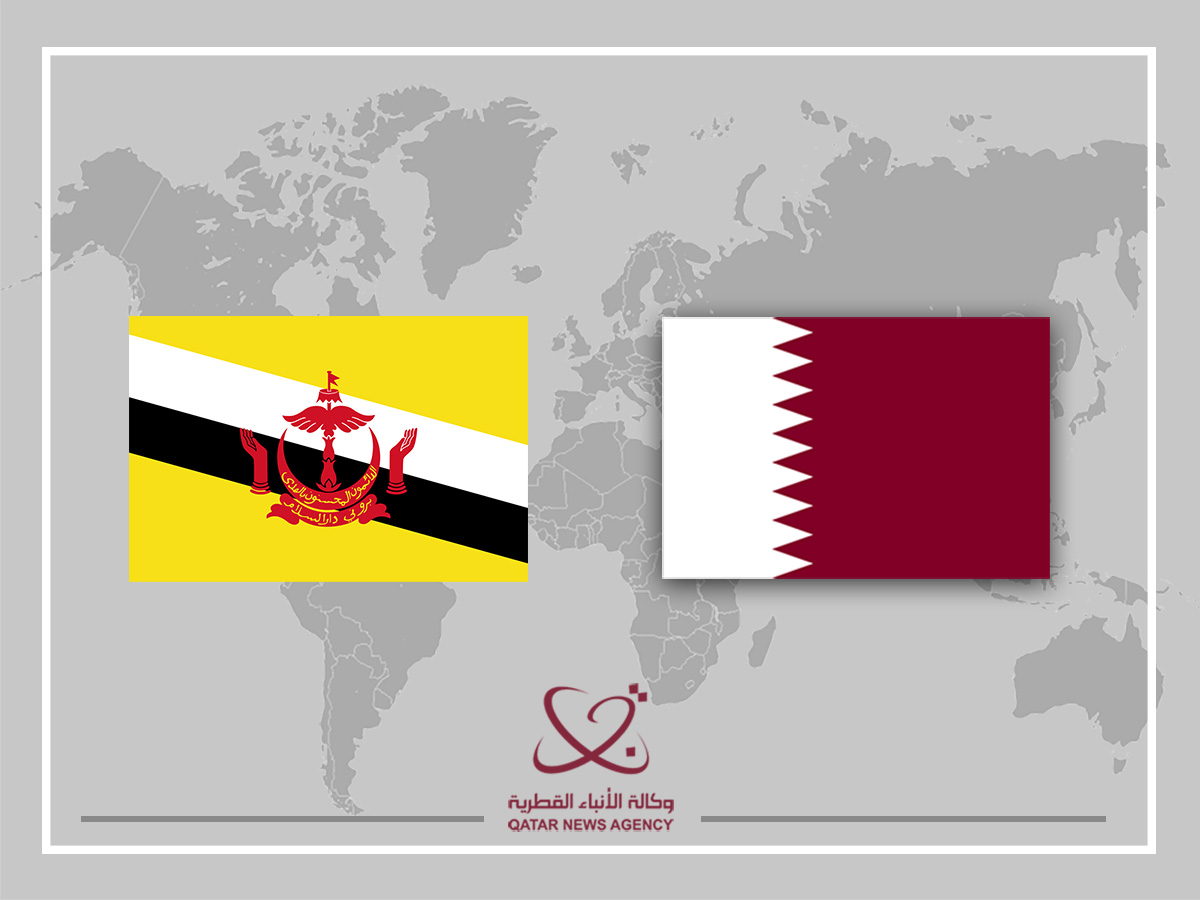
Doha, November 08 (QNA) - The fraternal relations between the State of Qatar and Brunei Darussalam are characterized by their deep-rooted strength, grounded in ties of religion, shared interests, and mutual visions regarding regional and international issues, as well as support for dialogue, security, and international peace.
The visit of HRH Crown Prince and Senior Minister at the Prime Minister's Office of Brunei Darussalam, Prince Al-Muhtadee Billah, to Doha on Sunday reflects the mutual desire to elevate these relations to more distinguished horizons across various fields.
The visit, which is His Highness's first to Doha, also constitutes a prominent milestone in giving momentum to the trajectory of bilateral relations between the two countries and exploring innovative partnerships that fulfill their aspirations in achieving sustainable development and economic prosperity.
Since the establishment of official diplomatic relations between Doha and Bandar Seri Begawan on October 2, 1991, the fraternal cooperation between the two countries has witnessed steady development, alongside reciprocal visits by senior officials and the signing of agreements and memoranda of understanding across numerous fields and sectors of common interest.
Brunei Darussalam opened its embassy in Doha on June 20, 2001, at the level of Charge d'Affaires, while the State of Qatar opened its embassy in Brunei Darussalam on October 11, 2008, at the same level. During the visit of HH the late Father Amir Sheikh Hamad bin Khalifa Al-Thani to Brunei on January 17, 2012, diplomatic representation between the two countries was elevated to ambassadorial level.
Frequent high-level meetings between the two nations, coupled with active diplomacy and consultations on the sidelines of international forums, reflect a shared political will to reinforce relations built upon mutual respect and common interests, as well as to develop bonds of friendship and opportunities for cooperation across various fields.
In the context of these meetings, HM Sultan Hassanal Bolkiah of Brunei Darussalam received HE Minister of State for Foreign Affairs Sultan bin Saad Al Muraikhi, in Bandar Seri Begawan on November 10, 2025. During the meeting, cooperative relations between the two countries and ways to support and develop them were reviewed, alongside several topics of mutual interest.
In November 2024, HE Prime Minister and Minister of Foreign Affairs Sheikh Mohammed bin Abdulrahman bin Jassim Al-Thani received HE Second Minister of Foreign Affairs of Brunei Darussalam, Erywan Pehin Yusof, in Doha. During the meeting, cooperative relations, and ways to support and reinforce them were reviewed, and both parties underscored the strength of the ties between the two countries, which are characterized by cooperation and synergy across various fields thanks to the wise visions of their leaderships.
In the realm of economic, commercial, and investment cooperation, the two nations share similar economic profiles, given the pivotal role of the oil and gas sector in national development, which opens wide avenues for integration and cooperation.
Within this framework, both sides seek to activate investment partnerships in renewable energy, petrochemicals, and food industries, in alignment with Qatar National Vision 2030 and Brunei Vision 2035.
The State of Qatar is actively developing its industrial, service, transport, and investment sectors, while Brunei Darussalam, through its National Vision 2035, seeks to enhance human capital and diversify economic activity.
The two countries are linked by a series of agreements and memoranda of understanding, including the Agreement on Economic, Trade, and Technical Cooperation, and the Agreement for the Avoidance of Double Taxation and the Prevention of Fiscal Evasion to promote capital flows, while the Air Services Agreement regulates mutual aviation movement to support tourism and trade exchange between the Gulf and Southeast Asia.
To enhance the exchange of curricula, students, and academic expertise, the two countries signed a memorandum of understanding for educational cooperation in 2012, allowing for the exchange of academic and study expertise, opportunities, and scholarships for university students, as well as joint scientific research. Meanwhile, religious factors contribute to fostering cultural exchange and sharing perspectives regarding Islamic economics, banking, and cooperation between religious institutions in both countries.
In the field of diplomatic relations and coordination, both nations adopt balanced positions in international forums, such as the United Nations and the Organisation of Islamic Cooperation, that support dialogue, security, and international peace, serving the interests of both countries, their peoples, and the peoples of the world in security, stability, and sustainable development.
International relations expert and consultant, Dr. Ahmed Ghaith Al Kuwari, highlights the importance of the anticipated visit of HRH Crown Prince Al-Muhtadee Billah to the State of Qatar. He believes it should not be viewed merely as a new stop in the record of official reciprocal visits between the two nations, but rather as an occasion to reassess their positions within an international system where the relationship among geography, energy, economy, and diplomacy is changing rapidly.
Speaking to Qatar News Agency (QNA), Dr. Al Kuwari pointed out the unique nature of relations between the two countries, adding: "We are before two nations belonging to distant geographical spaces that nevertheless converge in core elements relating to Islamic identity, national sovereignty, hydrocarbon resources, economic openness, and a keenness to develop multi-directional international relations."
He stated that if international relations are traditionally measured by the volume of trade and investment and the frequency of official visits, the relations between Doha and Bandar Seri Begawan demand an additional criterion: the ability of two nations to transform points of similarity between their national experiences into sustainable strategic interests.
He considered that the stages of development in diplomatic representation between the two countries reflect not merely a protocol progression, but rather a gradual transition from mutual recognition to the establishment of stable institutional communication channels. He noted that the time elapsed since the establishment of relations is sufficient to review what has been achieved and identify areas not yet invested to the extent permitted by the available capabilities of both sides.
Al Kuwari touched upon the meeting held in New York in September 2026, which brought together HE Minister of State for Foreign Affairs Sultan bin Saad Al Muraikhi and HRH Minister of Foreign Affairs of Brunei Darussalam Prince Abdul Mateen, on the sidelines of the 81st session of the United Nations General Assembly. During that meeting, emphasis was placed on enhancing high-level visits, developing interconnectedness between the two countries, expanding cooperation within international organizations, and exchanging views on regional and international developments.
He added: "From here, the anticipated visit can be read as an extension of an existing diplomatic trajectory rather than a separate event," serving as an opportunity to transition the bilateral relations to a new advanced phase, define joint priorities, and establish practical mechanisms to follow up and measure results periodically.
Dr. Al Kuwari noted that the visit gains additional importance in the context of ongoing transformations in relations between the Gulf Cooperation Council (GCC) member states and the Association of Southeast Asian Nations (ASEAN). Asia is no longer viewed by the Gulf merely as a vast market for exporting oil and gas, nor is the Gulf viewed by Asian economies merely as an energy source or capital destination. The relationship between the two regions has become more complex due to entangled supply chains, expanding cross-border investments, and growing interdependence in transport, services, technology, and advanced industries.
He opined that the principles binding Qatar and Brunei Darussalam grant them a political foundation upon which they can build to expand consultation on international issues. Furthermore, cooperation between them can transcend the traditional framework of bilateral relations to become one of the supporting pathways for dialogue between the Gulf and Southeast Asia regarding energy stability and trade.
"ASEAN" bloc represents an important economic extension of Qatari relations with Brunei Darussalam and its regional environment. According to the announcement by the Chair of ASEAN Committee in Doha in September 2026, the annual trade volume between Qatar and ASEAN member states approaches USD 15 billion (approximately QAR 54.6 billion).
The Association affirmed its keenness to continue strengthening close political cooperation with the State of Qatar, noting that this shared desire was embodied in the participation of HH the Amir Sheikh Tamim bin Hamad Al-Thani in the second ASEAN-GCC Summit hosted by Malaysia in May 2025.
The Committee mentioned that the State of Qatar is among the most prominent investors in ASEAN nations, holding a diverse investment portfolio that includes energy, financial services, real estate, telecommunications, agriculture, hospitality, and healthcare.
For her part, Director of the Gulf Studies Center at Qatar University, Dr. Maryam Al Kuwari, affirms that the visit of HRH Crown Prince Al-Muhtadee Billah to the State of Qatar gains additional strategic importance considering the growing development of bilateral relations, as well as relations between Gulf Cooperation Council and the ASEAN bloc, of which Brunei Darussalam is a member state.
Speaking to Qatar News Agency (QNA), Dr. Al Kuwari stated that relations between the State of Qatar and Brunei are not confined to their bilateral framework; rather, they form part of a broader trajectory aimed at strengthening political and economic partnerships between two regions possessing growing significance in the global economy and international balances.
She reviewed the journey of fraternal relations between the two countries since their establishment in 1991 and the notable momentum they have gained in recent years, pointing out their shared Islamic identity, possession of significant oil and natural gas resources, and adoption of developmental orientations aimed at diversifying the economy and strengthening international partnerships.
She mentioned that expanding cooperation between Qatar and Brunei would contribute to enhancing institutional communication between the GCC and ASEAN, opening new horizons for integration in energy, investment, food security, technology, education, and halal industries, alongside coordinating positions regarding regional and international issues of common interest.
Brunei Darussalam is situated on the northwestern coast of Borneo, overlooking the South China Sea to the north, while surrounded by Malaysian territory across most of its land borders. Spanning an area of no more than 6,000 square kilometers with a population of under half a million, the Sultanate possesses substantial oil and gas wealth, a high level of income, and an economy striving to diversify its industrial, commercial, and service activities.
Oil and natural gas represent the backbone of Brunei's economy, while its foreign trade relies on exporting energy and related industrial products in exchange for importing a large portion of its needs for machinery, equipment, consumer goods, and foodstuffs.
The Sultanate seeks to boost production of rice, vegetables, poultry, and fish, and to develop food industries with the aim of reducing import dependency and improving food security. The halal food industry also presents an additional opportunity, leveraging its Islamic identity and national standards for halal food production to create avenues for expansion into major Asian and Islamic markets.
Brunei also possesses tourism assets including tropical rainforests, nature reserves, rivers, beaches, Islamic architecture, and historical sites.
Dr Maryam Al Kuwari viewed that current developments make enhancing regional integration and cooperation among economic blocs an urgent strategic priority, stressing that the visit reflects the desire to foster connectedness and integration between the two sides across various fields and sectors, including the economic and tourism dimensions.
She pointed out that expanding relations, alongside direct economic gains, represents a strategic orientation toward broadening diplomatic activity and diversifying international partnerships within the framework of "multi-alignment" or "multiple strategic partnerships," which allows states to build balanced relations with multiple international actors without being beholden to a single international axis. These gains increasing importance amid an international system characterized by fragmentation and escalating competition among major powers.
She affirmed that the visit represents an additional opportunity for the State of Qatar to expand its economic and political presence beyond its immediate geographic scope, whereas Brunei Darussalam seeks, in turn, to widen its network of international partnerships and enhance its political and economic options amid escalating major power competition in the Indo-Pacific region.
She concluded her statement by noting that the visit of HRH Crown Prince of Brunei Darussalam to the State of Qatar represents an opportunity to strengthen the strategic dimension of bilateral relations, consolidate the role of both countries in supporting Gulf-Asian partnership, and contribute to diversifying economic and diplomatic relations while fostering stability and sustainable development in both regions. (QNA)


Hello! How can we help?


