Qatar news agency logo, home page
  • Telegram
  • Whatsapp
  • Twitter
  • Facebook
  • Instagram
  • YouTube
  • SnapChat
  • RSS Feed
  • English flagEnglish
  • العربية flagالعربية
  • Français flagFrançais
  • Deutsch flagDeutsch
  • Español flagEspañol
  • русский flagрусский
  • हिंदी flagहिंदी
  • اردو flagاردو
  • All navigation links
user iconLogin
  • All navigation links
  • Qatar
  • General
  • Economy
  • Miscellaneous
  • Sport
  • Technology
  • QNA Training Center
Live Stream
  • Home
  • Qatar
  • General
  • Economy
  • Miscellaneous
  • Sport
  • Technology
  • Reports and Analysis
  • News Bulletin
  • Qatar 2022
  • Qatar 2030
  • Live Stream
  • Video Albums
  • Photo Albums
  • Infographics
  • Department of Foreign Media Affairs
  • Media Organizations
  • QNA Training Center
  • Media Offices
  • Accredited correspondents
  • Events and Exhibitions
  • Important Links
  • Job vancancies
  • Get Information

Follow Us On Social Media

  • Telegram
  • Whatsapp
  • Twitter
  • Facebook
  • Instagram
  • YouTube
  • SnapChat
  • RSS Feed
  • About Us
  • Contact Us
  • Browsing
  • Login
  • Terms of Use
  • Privacy Policy
LATEST
GCC Condemns Israel's Settlement Expansion, Calls for International Action
QNB: China's Electric Vehicle Exports Accelerate as Industry Moves Toward Consolidation
Tasweer to Present Second Edition of "Frame and Focus" Exhibition
Kuwaiti Crude Rises $3.45 to $93.71 a Barrel
US, Canada Fail to Reach Trade Deal, Face Fresh Tariffs

Back News Details

Facebook Twitter Email Pinterest LinkedIn Reddit Whatsapp mail See more…

QNB: China's Electric Vehicle Exports Accelerate as Industry Moves Toward Consolidation

Economy

  • A-
  • A
  • A+
استمع
news

Doha, August 22 (QNA) - China's electric vehicle export boom is highlighting both the success of its industrial strategy and the growing strains of an industry that is increasingly outgrowing its domestic market, Qatar National Bank (QNB) said in its weekly economic commentary.

The sector's future will increasingly depend on its ability to compete in global markets and consolidate at home as Beijing shifts policy from active promotion toward managing overcapacity and improving efficiency, QNB said.

Electric vehicles remain a source of export strength and international influence for China, but they also underscore the broader challenge of shifting growth away from investment-led overcapacity toward a more sustainable, demand-driven model.

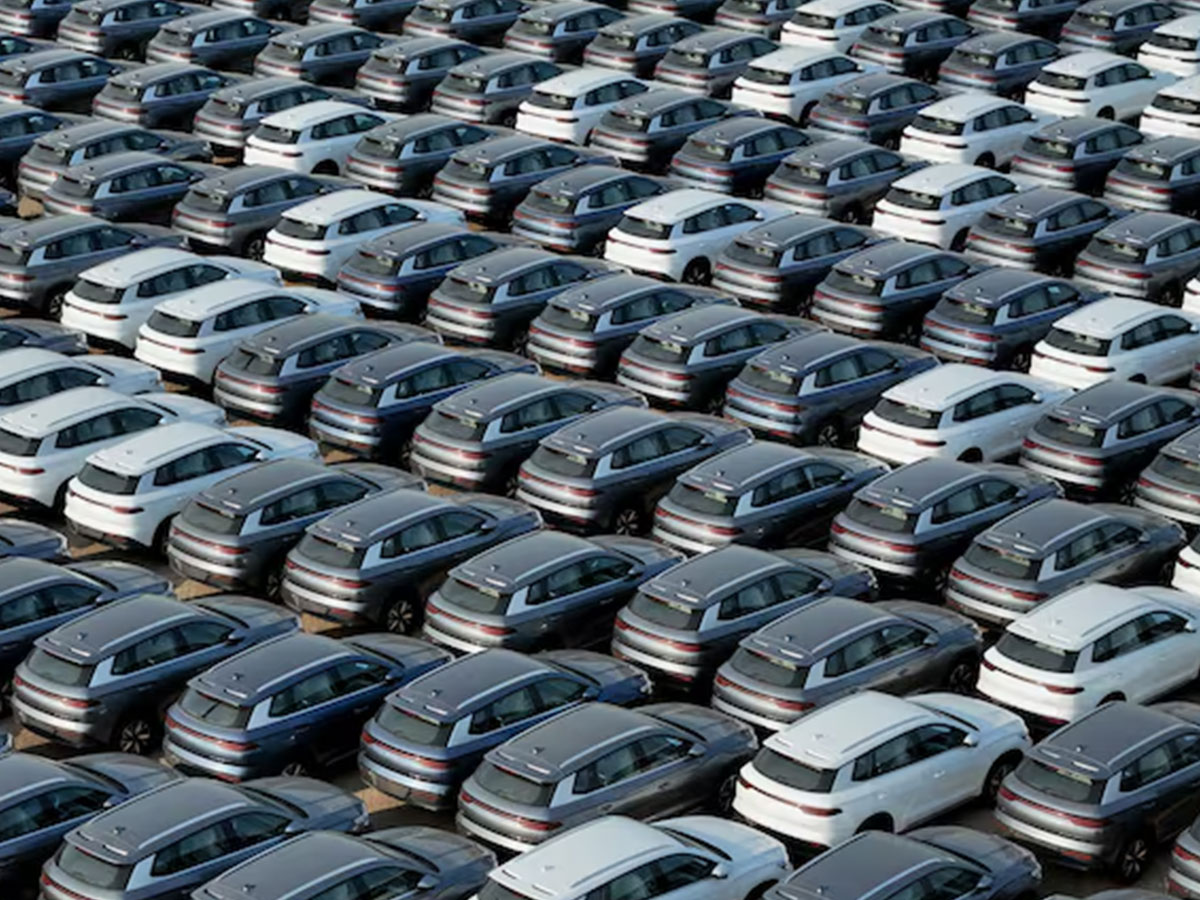
Over the last decade, China has rapidly become the dominant force in global vehicle exports. In 2025 alone, exports of new energy vehicles (NEVs) — a category spanning battery-electric cars, plug-in hybrids and fuel-cell vehicles — reached 2.62 million units, double the level of a year earlier. Battery-electric exports alone rose by around two-thirds to 1.65 million units, while plug-in hybrid shipments more than tripled.

This surge helped lift total Chinese vehicle exports above 7 million, confirming the country as the world's largest auto exporter by a wide margin. The momentum has carried into 2026: in the first quarter, NEV exports more than doubled again from a year earlier to close to one million units, accounting for over 40% of all vehicles shipped abroad.

This external strength stands in contrast to a more complex picture at home. In its new 15th Five-Year Plan, covering 2026 to 2030, Beijing omitted NEVs from its list of strategic emerging industries for the first time in fifteen years.

Rather than a retreat, the move signals that policymakers now regard the sector as mature enough to be shaped increasingly by market forces rather than sustained by government subsidies.

QNB identified three key factors behind China's electric vehicle export boom, how it fits within the priorities of the new five-year plan, and what it implies for the broader Chinese economy.

First, exports have become the principal engine of growth for China's automotive sector. Domestic demand softened notably at the start of 2026, as generous purchase-tax incentives were scaled back and the previous full exemption was replaced by an effective 5% rate.

Domestic NEV sales fell by close to a quarter in the first quarter, even as production capacity continued to expand. With factories running well below efficient utilisation levels, overseas markets have become both a safety valve for surplus output and a source of stronger margins, as vehicles typically sell for more abroad than in China's intensely competitive home market.

Manufacturers such as BYD, Geely and Chery have broadened their global footprint at pace, with exports now representing roughly one-third of total industry volume. 

Second, QNB added, the export drive aligns closely with the strategic reorientation embedded in the five-year plan. Having already surpassed a 50% share of domestic car sales — a milestone reached more than a decade ahead of the original target — the NEV industry no longer requires the priority status it once held.

Instead, the plan channels resources toward emerging frontiers such as quantum technology, hydrogen and advanced manufacturing, while recasting electric vehicles as part of a wider energy-system strategy, with ambitious targets to roughly double charging infrastructure and integrate vehicles with the power grid by 2030.

At the same time, a quality-over-quantity campaign seeks to curb the intense price competition that has eroded profitability and encourage consolidation in the sector.

Third, the implications for the wider economy are double-edged. On one hand, the industry has become a pillar of China's export performance and a showcase for its manufacturing and technological capabilities, contributing to a record goods trade surplus.

On the other, years of aggressive expansion have left the sector with substantial overcapacity: more than a hundred brands compete domestically, factory utilisation sits near 60%, and industry profit margins have fallen to historic lows of around 3%.

These developments have reinforced broader deflationary pressures that extend well beyond the auto sector. Heavy reliance on exports also carries risks, as several major markets have raised trade barriers, prompting manufacturers to shift toward building production capacity abroad.

All in all, QNB said China's electric vehicle export boom reflects both the remarkable success of its industrial strategy and the growing pains of an industry that has outgrown its domestic market.

As policy shifts from active promotion toward managing overcapacity and rewarding efficiency, the sector's future will increasingly be determined by global competitiveness and consolidation at home.

For the broader economy, electric vehicles remain a source of strength and international influence, but also a test of China's ability to rebalance growth away from investment-led overcapacity toward a more durable, demand-driven expansion. (QNA)

Economy

Qatar

QNA

Qatar News Agency
chat
qna logo

Hello! How can we help?

Beta
close
Download QNA app
Download add from Google store Download add from Apple store
  • Telegram
  • Whatsapp
  • Twitter
  • Facebook
  • Instagram
  • YouTube
  • SnapChat
  • RSS Feed
  • Home
  • Qatar
  • General
  • Economy
  • Miscellaneous
  • Sport
  • Technology
  • Reports and Analysis
  • News Bulletin
  • Qatar 2022
  • Qatar 2030
  • Live Stream
  • Video Albums
  • Photo Albums
  • Infographics
  • Department of Foreign Media Affairs
  • Media Organizations
  • Media Offices
  • Accredited correspondents
  • QNA Training Center
  • Events and Exhibitions
  • Important Links
  • Job vancancies
  • Get Information
Get the Latest News

Get a daily email featuring the latest talk, plus a quick mix of trending content.

By subscribing, you understand and agree that we will store, process and manage your personal information according to our Privacy Policy

All rights reserved to © 2025 Qatar News Agency

Terms of Use | Privacy Policy

Cookies help us improve your website experience. By using our website, you agree to our use of cookies.