
 English
 العربية
 Français
 Deutsch
 Español
 русский
 हिंदी
 اردو

 Login
Minister of Commerce and Industry Inaugurates 2nd Public–Private Sector Dialogue Forum
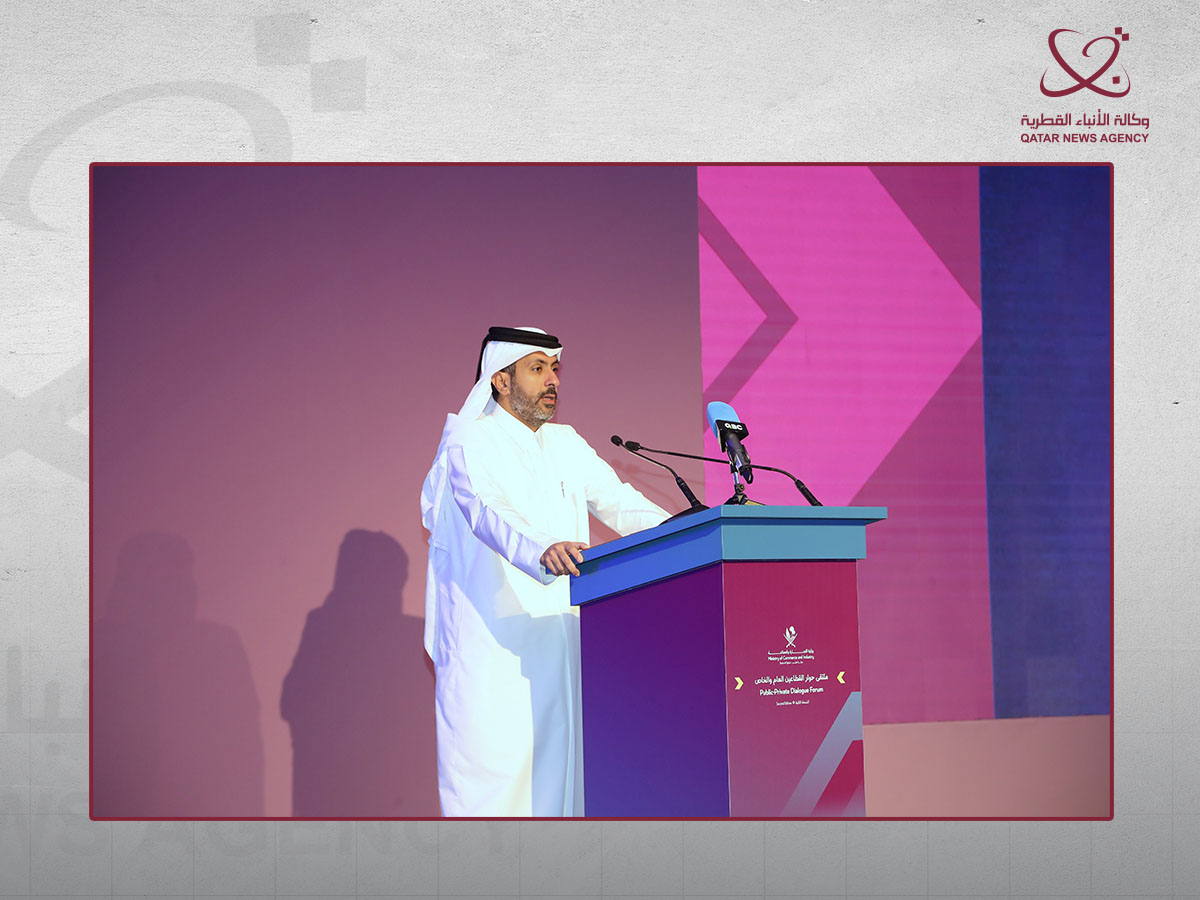

Doha, November 25 (QNA) - HE Minister of Commerce and Industry Sheikh Faisal bin Thani bin Faisal Al-Thani inaugurated the 2nd Public-Private Sector Dialogue Forum on Wednesday.
Organized by the Ministry Commerce and Industry (MOCI) and attended by a number of senior officials and private sector representatives, the forum aimed to discuss key challenges facing the business environment, explore practical solutions, and develop joint initiatives, all with the goal of advancing the business climate and strengthening the partnership between the two sectors.
Marking the occasion, His Excellency emphasized that the convening of the forum's second edition serves as a continuation of the dialogue initiated in 2025. It reinforces the conviction that building the desired economy cannot be achieved by the government or the private sector acting alone; rather, it requires a partnership between both sides, characterized by candid dialogue and the assumption of shared responsibility.
His Excellency noted that this partnership was tested under the conditions the region has experienced since the end of February, including the resulting disruptions to trade and supply chains, and played a vital role in maintaining market stability and bolstering public confidence. Thanks to cooperation and coordination between state institutions and the private sector, goods remained available, factories continued to operate, and supply chains remained intact.
His Excellency also expressed his gratitude to the MOCI's partners in the private sector for their cooperation and efforts in ensuring business continuity and meeting the needs of the local market during this period.
HE the Minister of Commerce and Industry indicated that the State of Qatar aims to strengthen the role of the private sector in driving economic growth, increasing exports, fostering innovation, and creating high-quality opportunities for future generations. He emphasized the government's commitment to cultivating a business environment characterized by clarity, flexibility, and efficiency - one that welcomes capital, expertise, and innovation to contribute to building a more diversified and sustainable economy. Furthermore, he underscored the importance of establishing a structured, institutionalized dialogue between the public and private sectors, a framework rooted in active listening, follow-up, accountability, and continuous improvement, to ensure that the relationship between the government and the private sector is more responsive, clearly defines respective responsibilities, and remains closely aligned with the needs of investors and the market.
His Excellency pointed out that economic data indicate progress across several areas: cumulative industrial investment has reached approximately QR 248.3 billion, the proportion of manufacturing plants that export their products has risen to 25 percent in 2026, private sector exports have grown by 12.5 percent, and the establishment of new businesses continues to see growth.
His Excellency highlighted that these indicators demonstrate the synergy between government entities and the private sector, emphasizing the importance of building upon this momentum and continuing to remove obstacles that hinder growth opportunities.
HE Sheikh Faisal bin Thani bin Faisal Al-Thani noted that, since the end of February, the region has faced an exceptional situation, one with repercussions that have extended to trade flows and supply chains, and that the priority has been to ensure that the basic needs of consumers in the State of Qatar are met, while maintaining the continuity of production in factories.
His Excellency added that the current phase necessitated intensified market oversight and the activation of a 24-hour operations center, involving over 300 field inspectors tasked with addressing all complaints within 24 hours. He further explained that supporting the private sector was essential to overcoming supply chain challenges, achieved through support and financing programs for raw materials and logistics, alongside continuous monitoring of the availability of 57 strategic food commodities, which were imported from 39 countries at a total value of approximately QR 8.38 billion.
His Excellency emphasized that the coming phase requires strengthening the partnership between the two sectors, directing investment toward high-value-added sectors, supporting the access of national companies to global markets, and leveraging innovation to achieve sustainable economic growth. He further expressed his confidence in the Qatari private sector's ability, given the experience and resilience it has acquired, to spearhead new growth opportunities.
His Excellency stressed the importance of the forum yielding specific priorities, clear responsibilities, and tangible outcomes, perceptible to both investors and consumers, rather than merely producing another list of recommendations.
As part of the forum, Assistant Undersecretary for Industrial Affairs and Business Development at the MOCI Saleh Majid Al Khulaifi delivered a presentation discussing the outcomes of a year of collaborative work since the forum's inaugural edition. He highlighted the efforts and achievements of the committees dedicated to improving the business environment, as well as the initiatives of the National Committee for the Development of Small and Medium-sized Enterprises (SMEs). Furthermore, he outlined key initiatives and projects implemented throughout 2026 aimed at streamlining procedures, facilitating business operations, and strengthening communication channels with the private sector, all of which contribute to addressing the challenges faced by the sector and enhancing the nation’s overall business environment.
In the same context, Assistant Chairman of the General Authority of Customs for Customs Affairs Talal Abdullah Al Shaibi delivered a presentation outlining the authority's efforts to develop customs services and facilitate trade. This includes the "Al Nadeeb" single-window system, the implementation of digital solutions and AI technologies, the acceleration of customs clearance and release procedures, as well as various initiatives designed to meet the needs of the private sector and enhance the efficiency of supply chains.
The forum featured a panel discussion on the role of legislation and government integration in developing government services, which included the participation of Assistant Undersecretary for Industrial Affairs and Business Development at the MOCI Saleh Majid Al Khulaifi, Assistant Undersecretary for Manpower Affairs in the Private Sector at the Ministry of Labor (MoL), Khames Mohammed Al Nuaimi, and Mr. Ghanem Khalifa Al-Attiyah, Assistant President of the General Tax Authority for Tax Affairs Ghanim bin Khalifa Al Attiyah.
The panel discussed the latest developments in legislation and policies affecting the business environment, as well as the role of integration among government entities in enhancing services, delivering them more swiftly and with greater clarity, in alignment with the needs of investors and the market.
The forum concluded with discussion sessions held by committees focused on improving the business environment. These sessions, which included representatives from relevant authorities and the private sector, addressed various topics and challenges within the industrial, commercial, logistics, healthcare, and technology sectors, as well as matters concerning the judiciary and the court system. The sessions served as a platform for exchanging views and discussing practical solutions and proposals, ultimately supporting the development of the business environment and fostering communication and coordination between government entities and private sector representatives. (QNA)


Hello! How can we help?


